











Flexible vs. Rigid Solar Panels: What Should You Choose?

Solar power solutions are in great demand every passing day, with more and more people in search of a trustworthy source of clean energy, which can be replenished for a very long period of time. However, when you are looking to set up a solar panel installation for your residential or commercial property, the first major decision in front of you would be whether you would want to go for flexible solar panels or rigid solar panels.
Within this comprehensive guide, we will enlighten you on what rigid solar panels and flexible solar panels actually are, provide a clarification on the differences and similarities of the solar panels, explain how and when each solar panel needs to be employed, and lastly, how the above information must be employed within a realistic context while determining the solar kit for your projects.
Key Points: Flexible vs. Rigid Solar Panels
Before making an option between flexible and rigid solar panels, it is essential to learn about their key features and differences.
Flexible Solar Panels
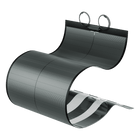
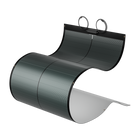
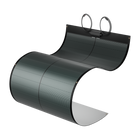
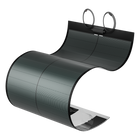
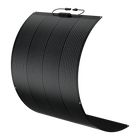
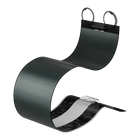
Flexible solar panels have the advantage of being lightweight and flexible, with thin-film cells or the compound CIGS (Copper Indium Gallium Selenide) being used and mounted on a polymer support. The types of flexible solar panels include the ones that can be folded 360 degrees, the ones partially folded, and the others that, for instance, in the case of the BougeRV Arch series Fibreglass Flexible Solar Panels, fold 270 degrees. They also weigh significantly less than the rigid type of solar panel.
BougeRV offers a range of flexible solar panels designed for mobile and outdoor use — ideal for RVs, boats, tents, and custom installations where traditional panels might not fit.

Key features:
- Lightweight and easily portable
- Can be mounted on curved or irregular surfaces
- Often fully waterproof for outdoor use
- Ideal for mobile solar kits
Benefits
-
Lightweight & Easy to Install: With their light weight, flexible panels do not require heavier support structures for mounting. They also install easily through the use of adhesive and light mounting hardware.
-
Great for Curved Surface Installation: Flexible panels can handle curved surface roofs of RV domes, boat cabins, and teardrop trailers, because the surface of the solar installation in your case isn’t flat.
-
Portable & Ideal for Travel: They are lightweight, which ensures that they are absolutely ideal for solar kits used in travel, camping, and off-grid applications.
Limitations
-
Lower Efficiency Than Rigid Panels: Because flexible panels sacrifice some cell density and mounting spacing, they tend to operate at lower conversion efficiencies.
-
Shorter Lifespan: Flexible units usually don’t last as long as rigid ones—often closer to 5-15 years vs. 20-25 years for rigid models.
-
Cost per Watt: The cost per watt may be higher in the case of flexible technology, though its installation is simpler.
BougeRV’s flexible panel lineup includes CIGS and fibreglass flexible panels — engineered to maximise durability while retaining flexibility.
Rigid Solar Panels
Rigid panels are your traditional framed solar modules. They’re built with crystalline silicon cells (often monocrystalline), encased in tempered glass with a strong aluminium frame. These panels are designed for long-lasting installations, typically on rooftops or solar arrays.
BougeRV rigid bifacial panels (the Australian site hasn't launched) are engineered for durability and high power output, with tempered glass protection and excellent weather resistance.
Key features:
- Highly efficient
- Durable and built for long-term installations
- Great for homes, RV roofs, and buildings
- Often used in complete solar kits
Advantages
-
High Efficiency: The efficiency level in rigid panels is usually much higher, with a high rate of converting solar energy to power, implying that there is much power within a square foot area. There are rigid panels that can produce power from both sides.
-
Longevity and Durability: With tempered glass and aluminium frames, rigid panels can withstand decades of weather and wear.
-
Lower Cost per Watt: For comparable wattage, rigid panels usually deliver lower upfront cost per watt than flexible alternatives (not counting installation hardware).
Standout options like BougeRV’s rigid bifacial solar panels can produce even more energy by capturing light from both sides of the module — increasing total output in many installations.
Limitations
-
Heavier and Harder to Install: Because they’re framed and glass-covered, rigid panels are heavier and often need racks or mounting hardware.
-
Not suited for curves: Such panels will not lie flat once installed and will not permit curved surfaces and "wrap-around" installations.
Solar Panels Comparison: Flexible vs. Rigid
|
Feature |
Flexible Solar Panels |
Rigid Solar Panels |
|---|---|---|
|
Weight |
Very lightweight |
Heavier |
|
Flexibility |
Bendable |
Rigid |
|
Efficiency |
Lower, good for mobile use |
Higher, better power density |
|
Durability |
Shorter lifespan |
Long lifespan |
|
Installation |
Easier & simpler |
Often requires hardware |
|
Best Use Cases |
Curved or portable surfaces |
Homes, permanent installations |
|
Cost per Watt |
Higher |
Lower |
Best Applications for Each Panel Type
Here's the performance of flexible and rigid panels in real-world applications:
Flexible Panels:
✔ RVs & Camper Vans: Design for conformance to curves and weight reduction.
✔ Boats & Marine Use: Waterproof and lightweight.
✔ Temporary Campsites: Easy to move and position.
✔ Compact Solar Kits: Easy deployment qualifies them for usage in portable off-grid solar kits.
Rigid Panels:
✔ Residential Homes: Well-suited for a steady supply of power.
✔ Large Off-Grid Systems: Higher output matches larger battery banks.
✔ Permanent RV Installations: If you’re building a long-term solar setup.
Solar Kits: Combining Panels and Components
Whether flexible or rigid panels, solar kits tie it all together. A standard solar kit includes:
▶ Solar panels (flexible or rigid)
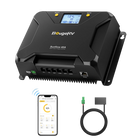
▶ Charge controller
▶ Storage battery
▶ Pure Sine Wave Inverter
BougeRV offers an extensive range of solar kits tailored to different applications — from flexible kits perfect for RVs and boats to rigid panel kits for larger installations.

Flexible Solar Kits
Created for less complex, mobile installations without heavy equipment. Ideal for those situations when you need mobility, quick setup, or if you are going to dismantle the system frequently.
Rigid Solar Kits
It is ideal for fixed roof, home, shed, cabin mounting, and other applications where long-term reliability and maximum power output are concerned.
How to Choose Solar Panels: 7 Questions to Ask Yourself
The right choice between flexible and rigid panels depends on your goals, installation site, budget, and power needs. Here’s how to decide:
1. Where Will You Install Them?
- Curved or mobile surfaces (e.g., RV roofs, boats, trailers): Flexible panels
- Flat roofs or ground-mounted arrays: Rigid panels
2. How Important Is Efficiency?
If maximising power per square foot matters — such as with a limited roof area — choose rigid panels with higher efficiency.
3. Will You Leave Panels Up Long-Term?
Rigid panels typically outperform flexible ones in longevity and durability.
4. How Much Weight Can the Structure Support?
Weight being an issue (as on lightweight RV camper roofs), flexible panels may save weight and facilitate easy installation.
5. What’s Your Budget?
The cost of flexible panels is always higher than that of rigid panels. If you want a panel that has flexibility and is price-friendly, BougeRV Arch series fibreglass flexible panels balance the price and portability; maybe they are not a bad choice for you.

6. How Much Power Do You Need?
Rigid panel kits might offer a better, more reliable performance solution for a home's power needs, such as whole home systems or battery backup systems, especially where a lot of power is required
7. Are You Looking for a Solar Kit?
Solar kits come with all the requirements needed. You can choose a flexible solar kit for travel and a rigid solar kit for domestic purposes. Moreover, you can also look for a solar panel kit from the "BougeRV" website, as buying solar things separately might result in an increased bill for you.
Final Thoughts
If mobility, weight reduction, and non-standard methods of deployment are the more important subjects to you, then flexible solar panels would be a better choice. They find many applications in solar kit packages, which are designed for travellers or boats operating in a remote environment on a short-term basis.
Fixed solar panels are best for larger systems where maximum efficiency and durability at a low cost per watt in dollar terms are called for.
About what your project requires: from the sun's availability and physical constraints of installation up to power goals.
Ultimately, the best choice is the one that best matches your specific application, budget, and energy goals.


