











What Are The Common Solar Panel Problems and Solutions

Increasingly, as road adventurers outfit their vans and overland vehicles with advanced solar panel kits, the desire for technical self-reliance is at an all-time high. Even though solar technology is becoming increasingly reliable, end users have frequently wondered, "Why are my solar panels not working?" especially when their power levels unexpectedly decrease. Even if you are investing in super-efficient bifacial panels or ultra-thin CIGS modules, it is crucial to know how your system works.
This manual serves as a bridge between theoretical science and everyday use outdoors. We go over typical problem spots from one perspective, environment-causing, to another, component-failure. We will give you thorough first-hand know-how to keep up with a dependable power supply wherever the road may lead you.
Understanding Solar Panel Kits and Common Issues
Before you start fixing anything, you'd better get a clear picture of how the different parts of your energy system work together to generate electricity if you want to be successful with your repairs. Sometimes, when one part breaks down, it can be a source of confusion by seemingly being the cause of the failure in another part, so you really have to be thorough and methodical. Solar panel kits constitute a small power grid that is controlled by the modules, electrical wiring, a charge controller, and a battery bank. The solar panel-related problems that prompt most users to ask, "Why are my solar panels not working?" are not really due to the "dead" panel but more commonly due to the panel being out of sync or disconnected in the first place.
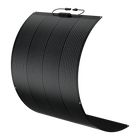
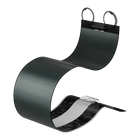
For those who are using very specific equipment, such as BougeRV, the types of solar panels that one selects would be the determining factor of what kind of issues will be addressed first. Panels that are made of fiberglass might get damaged if there is any kind of surface scratching, whereas panels made of glass are most likely to get damaged due to the mount bracket vibrations.
Step-by-Step Solar Panel Troubleshooting Guide
A good diagnostic plan should logically move from the simplest external factors and only then go to the complex internal components of the electrical system. Sticking to a standard procedure will help rescue you from hours of frustration and circumvent buying parts that are still working.
Checking Connections and Solar Panel Kits' Wiring
Electrical continuity is the backbone of any solar installation, and loose or corroded wires are the leading cause of system failure. Even a single loose MC4 connector can break the circuit and stop the flow of energy entirely.
When performing solar panel troubleshooting, start by inspecting the underside of your panels and the entry points to your vehicle or cabin. Look for frayed wires, signs of heat damage. If you are using portable panels, check the adapter cables for kinks or internal breaks.

Identifying Physical Damage and Environmental Obstacles
It is the environment that is most often to blame when power generation falls short of target levels. Even the best modules need an unobstructed path to the sun if they are to operate at their rated specifications.
Micro-shading is a popular reason people wonder, "Why are my solar panels not working?" It happens when a tiny object, such as a vent pipe or a fallen leaf, casts a shadow over only one cell. In many traditional panels, shading one cell can reduce the output of the whole string by a large margin. So, check and clean your panels if you see any bird droppings, thick dust, or tree sap on them.
Why Are My Solar Panels Not Working at Full Capacity?
Sometimes a system is functioning, but the output is significantly lower than what the manufacturer promised. This "low-power" state is often more confusing than a total blackout because the cause is usually invisible.
Your entire setup efficiency is going to largely hinge on how well the voltages of your panels and battery bank match. If you wonder, "Why are my solar panels not performing at their best?" the first thing is to check the display of your charge controller. Solar panels also suffer from a temperature-related "thermal derating" phenomenon, i.e., when the panels get hotter, they produce less power. Hence, multi-facial (MFG) panels are one of the options, which have their under-panel air circulation (BougeRV Mono series panel), making them a great choice in hot climates.
|
Symptom |
Potential Cause |
Recommended Solution |
|
Zero Watts Output |
Blown fuse or tripped breaker |
Replace the fuse or reset the circuit breaker |
|
Fluctuating Voltage |
Loose MC4 connectors or wiring |
Tighten all connections and check for corrosion |
|
Low Amperage |
Heavy shading or dirty panels |
Clean panels and move vehicle to direct sunlight |
|
Battery Not Charging |
Controller settings mismatch |
Calibrate the controller to match the battery chemistry |
|
"Overvoltage" Error |
Incorrect series wiring |
Rewire panels in parallel or check controller limits |
Advanced Fixes for Solar Panel Kits
If basic cleaning and connection checks do not resolve the issue, you must look toward the electronic management systems. Modern solar setups rely on sophisticated controllers to bridge the gap between the sun and your storage.
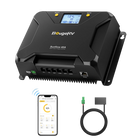
The charge controller can be thought of as the "brain" of your system. As such, if it is not properly set up, it can prevent the batteries from being charged. At a minimum, when doing solar panel troubleshooting, make sure that your controller is configured for the right battery type (Lithium, AGM, or Lead-Acid). A wrong profile can cause the controller to go into "float" stages prematurely, in which it limits power because it mistakenly considers the battery as full. Moreover, check out "ground faults, " which happen when a wire contacts the metal body of your vehicle, making the system power off for safety reasons.
Maintaining Your BougeRV Solar Setup for Longevity
Prevention is the most effective form of troubleshooting, as regular maintenance prevents the most common failure points from ever developing. A proactive approach ensures that your adventure is never interrupted by a sudden loss of power.

BougeRV offers a diverse range of solar solutions, including the Yuma series CIGS panels, which are known for their shade tolerance and durability. However, even these advanced solar panel kits benefit from a monthly inspection. Ensure that the adhesive on flexible panels is holding firm and that rigid panels have no cracked glass from road debris.
Optimizing the Angle and Placement
Maximum sunlight absorption occurs when the sun's rays hit the panel at a perpendicular angle. If you are stationary for long periods, adjusting your panels can solve many "low output" complaints.
Many users who wonder, "Why are my solar panels not working?" are simply facing the wrong direction or are hampered by the winter sun’s low arc. Adjusting the solar panels to tilt them toward the sun can increase your daily energy harvest.
Cleaning the Panel Surface
If dust, pollen, leaves, or bird droppings are blocking sunlight, a gentle cleaning may restore lost output.
Conclusion
Mastering the technical challenges associated with off-grid power systems is an essential skill for today's adventurer. So, what are you going to do when you ask yourself, "Why are my solar panels not working?" Most causes of solar panel problems are actually simple environmental factors or a basic connection mistake. In fact, strict inspection scheduling along with in-depth knowledge of solar panel kit requirements will help you to successfully supply your system with clean and silent energy for a long time.
However, similar to any high-performance tool, solar power also needs occasional attention and calibrated care to run as expected. In this way, you can be confident that your solar system will be up and running, powering your adventures wherever the grid is unreachable. Maintain the cleanliness of your gear, keep up with preventive measures, and follow the logical troubleshooting steps in this guide to stay powered by the sun.


